

THE MOSQUITO PROJECT
Disease Control, Federal Authority, and the Legal Framework Behind Releasing Millions of Insects. HCO FIELD NOTES. May, 2026.

Editor’s Note:
This article examines the scientific, legal, and policy framework surrounding proposals to release laboratory-produced mosquitoes for disease-control purposes. It is not intended as medical advice and does not endorse or oppose any specific mosquito-control program. Instead, it examines the institutions, laws, and ecological systems involved in these decisions.
Executive Summary
Most Americans rarely think about mosquitoes beyond the annoyance they create during summer evenings. They are treated as a seasonal inconvenience, an unavoidable part of spending time outdoors, and little more than background noise in warmer months. Yet mosquitoes occupy a far more significant place within public health systems than most people realize. Collectively, mosquito-borne diseases affect millions of people worldwide each year and remain a persistent concern for health agencies tasked with controlling the spread of pathogens such as dengue, Zika, West Nile virus, and yellow fever.[1]
For decades, mosquito control programs relied primarily upon pesticides, drainage projects, habitat modification, and public education campaigns.[4] Increasingly, however, researchers have begun pursuing a different strategy. Rather than attempting to kill mosquitoes after they emerge, scientists are experimenting with methods designed to suppress mosquito populations before they can successfully reproduce.
One of the most ambitious examples of that approach emerged this year when reports circulated that Google’s life-sciences subsidiary, Verily, was seeking authorization to release millions of laboratory-produced mosquitoes in portions of Florida and California.[5] Predictably, the headlines generated public concern. Social media quickly filled with speculation, accusations, and competing explanations regarding what was actually being released and who had authorized the project.
The resulting controversy reflects a broader challenge facing modern institutions. Scientific and regulatory agencies increasingly possess the ability to intervene in ecological systems at scales that would have seemed unimaginable a generation ago. At the same time, public trust in those institutions has become increasingly fragile.[23][24] As a result, even relatively routine regulatory decisions now unfold against a backdrop of skepticism, uncertainty, and political polarization.
The mosquito proposal therefore represents more than a public-health story. It is also a story about environmental law, federal regulatory authority, biotechnology, risk management, and public trust. Most importantly, it raises a question that appears repeatedly across modern environmental policy:
Who decides what level of intervention in a natural system is acceptable, and what happens when the public no longer fully trusts the institutions making those decisions?
The Mosquito Problem
Mosquitoes are among the most heavily studied animals on earth, not because of their ecological significance alone, but because of their role as disease vectors.[1] While the United States experiences relatively limited mosquito-borne disease compared to tropical regions, outbreaks remain a recurring concern for public-health agencies.

West Nile virus first appeared in the United States in 1999 and spread rapidly across the country within a few years.[2] More recently, public-health officials have monitored concerns involving dengue fever, chikungunya, and Zika virus.[3] Although most Americans encounter mosquitoes merely as a nuisance, health agencies view them through a different lens. To epidemiologists and vector-control districts, mosquitoes represent a mobile pathway through which diseases can spread between wildlife populations and human communities.
Historically, mosquito-control efforts focused on reducing habitat and suppressing populations through chemical means.[4] Local mosquito districts routinely apply larvicides to standing water, conduct surveillance programs, and deploy insecticides when disease outbreaks appear likely.[4] These programs have proven effective in many situations, but they are not without limitations. Chemical resistance can emerge over time, public opposition to pesticide applications remains common, and broad-spectrum control methods often affect non-target species.[15]
These limitations have encouraged researchers to explore alternative approaches that rely less heavily on chemical suppression and more heavily on biological systems.[6][7] That search eventually led to a strategy that sounds unusual at first glance: releasing more mosquitoes in order to create fewer mosquitoes.
What Is Actually Being Released?
The first challenge in understanding the controversy surrounding the proposed mosquito releases is separating the underlying project from the headlines describing it.
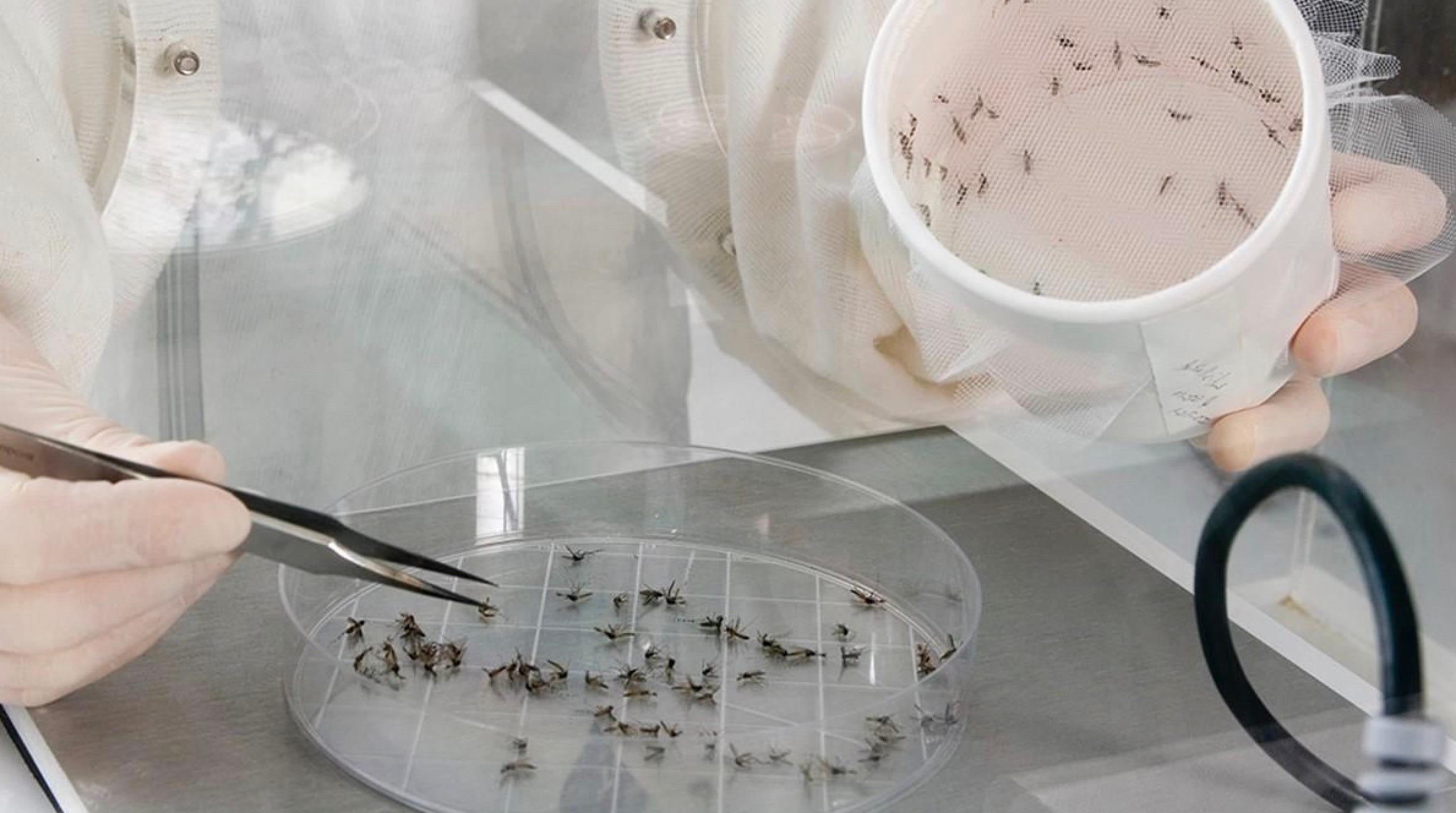
Many news reports framed the story as Google releasing tens of millions of mosquitoes into the environment. While technically true in a narrow sense, that description leaves out most of the details that matter. The proposal is not being conducted by Google itself, nor does it involve the indiscriminate release of ordinary wild mosquitoes. Instead, the project is associated with Verily, Google’s life sciences subsidiary, through a mosquito-control initiative known as Debug.[5]
The objective is not to increase mosquito populations. It is to reduce them.
To understand how that works, it helps to understand the target species. The program focuses on mosquito species capable of transmitting diseases that concern public-health officials. Researchers raise large numbers of male mosquitoes in controlled facilities and expose them to a naturally occurring bacterium known as Wolbachia.[6][7] The bacterium is not an artificial creation. It already exists throughout nature and is estimated to occur in a substantial percentage of insect species worldwide.[7]
When male mosquitoes carrying specific strains of Wolbachia mate with wild females that do not carry compatible strains, the resulting eggs fail to develop properly.[6][8] The mating occurs, but reproduction effectively stops. Over time, repeated releases can suppress local mosquito populations by reducing the number of viable offspring entering the next generation.[6][8]
The strategy relies on a biological phenomenon known as cytoplasmic incompatibility.[8] Although the term sounds highly technical, the concept is relatively straightforward. The released males compete with wild males for mates. If enough of those matings occur, fewer viable mosquitoes emerge in subsequent generations. Population levels gradually decline without requiring large-scale pesticide applications.[6][8]
An important detail often missing from public discussion is that the released mosquitoes are male. Male mosquitoes do not bite humans because they do not require blood meals.[10] Female mosquitoes are responsible for biting behavior because they require blood to support egg production.[10] As a result, the insects being released are not themselves capable of transmitting disease through biting.
This distinction matters because many public reactions appear to assume the project involves releasing additional biting mosquitoes into already affected communities. In reality, the stated goal is precisely the opposite. The project seeks to suppress future mosquito populations by releasing males incapable of biting.
Another source of confusion involves the relationship between the Verily proposal and earlier genetically modified mosquito programs. Several years ago, biotechnology company Oxitec proposed and conducted releases involving genetically engineered mosquitoes in portions of Florida.[11][12] Those projects generated significant controversy and became the subject of intense public debate.
The Verily proposal is different.
While both projects pursue mosquito suppression, they rely on different technologies and operate through different biological mechanisms. Oxitec’s approach involved genetic modification designed to reduce offspring survival.[11][12] Verily’s approach relies primarily upon Wolbachia-based reproductive incompatibility.[6][8] To many members of the public, these distinctions may appear minor. To regulators and scientists, however, they represent fundamentally different technologies subject to different risk assessments and regulatory considerations.[13]
The proposal currently under consideration is not a plan to release genetically engineered disease-carrying mosquitoes into the environment. It is a population-suppression strategy built around the release of laboratory-produced male mosquitoes carrying a naturally occurring bacterium already widespread throughout insect communities.[6][7]
The Ecology of Mosquito Suppression
At first glance, reducing mosquito populations appears difficult to oppose. Mosquitoes are widely disliked, transmit disease, and rarely inspire the sort of public sympathy afforded to larger wildlife species. From a purely human perspective, the prospect of fewer mosquitoes and fewer mosquito-borne illnesses sounds like an obvious improvement.
Ecological systems, however, rarely operate according to human preferences alone.

One of the recurring lessons of environmental management is that interventions often produce consequences beyond their intended objectives. Sometimes those consequences are positive. Sometimes they are negative. Most often, they are simply more complicated than anticipated.[18][21]
Supporters of mosquito-suppression programs argue that technologies such as the Wolbachia method offer significant advantages over traditional control measures.[6][7] Because the approach targets specific mosquito species, it may reduce the need for broader pesticide applications that can affect non-target organisms.[15][16] Public-health agencies view this as particularly attractive because chemical control programs often face resistance from both environmental groups and local communities concerned about repeated spraying.[15]
From that perspective, biological suppression appears to offer a more precise tool. Rather than attempting to kill insects indiscriminately, managers can target particular disease-carrying species while leaving much of the surrounding ecosystem untouched.[6][16]
The potential public-health benefits are significant. Mosquito-borne illnesses remain a major concern in many parts of the world,[1][16] and climate conditions favorable to mosquito activity appear to be expanding in portions of the United States.[17] Public-health officials argue that reducing populations of disease vectors before outbreaks occur may ultimately save lives while reducing long-term reliance on chemical controls.[16]
Yet ecological systems rarely reward certainty.
One of the most common concerns raised by critics involves the broader role mosquitoes play within food webs.[19] Mosquitoes occupy a position that is simultaneously insignificant on an individual level and potentially important in aggregate. Various fish, amphibians, reptiles, birds, bats, and insects consume mosquitoes at different stages of their life cycle.[19] While few species depend exclusively upon mosquitoes for survival, questions remain regarding the long-term ecological consequences of intentionally suppressing populations across large geographic areas.[18][20]
Supporters of the technology generally respond that mosquito-control programs target specific species rather than mosquitoes as a whole.[16][20] More than 3,500 mosquito species exist worldwide, and only a relatively small number are responsible for transmitting the diseases most concerning to public-health officials.[1][16] From this perspective, suppressing particular vector species does not equate to eliminating mosquitoes entirely.
That argument carries substantial scientific support,[20] but it does not eliminate uncertainty.
Ecologists have spent decades documenting how ecosystems respond to changing pressures, and history provides numerous examples where environmental interventions produced consequences that were not fully anticipated at the time.[18][21] Invasive species introductions, predator eradication campaigns, fire suppression policies, and water-management projects were often implemented with clear objectives and strong scientific justification. Many achieved their intended goals. Some also produced secondary effects that emerged only years or decades later.[21]
The lesson is not that intervention should never occur.
The lesson is that ecological systems are often more interconnected than they initially appear.[18][22]
Mosquito suppression therefore exists within a broader debate concerning environmental management itself. Modern societies increasingly possess the technological capacity to influence biological systems at large scales.[13][22] The question is no longer whether intervention is possible. The question is how much confidence policymakers should have in their ability to predict outcomes before those interventions occur.
This tension is particularly visible in mosquito management because the stakes appear so asymmetrical. On one side sits the possibility of reducing disease transmission and limiting human suffering.[1][16] On the other sits the possibility that ecological consequences may prove more complicated than expected.[18][22]
Reasonable observers can acknowledge both realities simultaneously.
The challenge is that public discussions often gravitate toward extremes. Advocates sometimes speak as though ecological concerns are insignificant, while opponents occasionally speak as though every intervention represents an existential threat. Neither position adequately reflects how environmental systems actually function.
Most environmental decisions occur in a space between certainty and uncertainty.
Mosquito suppression is no exception.
The technology may ultimately prove highly effective. It may become a routine component of public-health infrastructure similar to vaccination programs, water treatment systems, or vector-control districts.[16][20] It may also reveal limitations, tradeoffs, and unintended consequences that only become visible after years of implementation.[18][22]
At present, both possibilities remain part of the conversation.
And that uncertainty helps explain why the debate extends far beyond mosquito biology alone.
Public Trust, Conspiracy Theories, and the Modern Information Environment
The scientific details surrounding mosquito-suppression programs are relatively straightforward compared to another challenge the project faces: public trust.

Few environmental initiatives today are evaluated solely on the basis of their stated objectives or technical merits. Instead, they enter an information environment shaped by years of declining institutional confidence, competing narratives, and widespread skepticism toward government agencies, corporations, and experts.[23][24] As a result, even projects supported by substantial scientific research frequently become the subject of intense public suspicion.
The proposed mosquito releases are no exception.
Within hours of major headlines appearing, social media platforms filled with claims that the program represented everything from genetic experimentation to population-control schemes. Some discussions linked the proposal to historical government research programs involving insects and vector species. Others connected it to broader concerns regarding biotechnology, public-health agencies, pharmaceutical companies, or the influence of large technology firms in areas traditionally managed by public institutions.
Most of these claims lack credible supporting evidence.[13][25] Available documentation indicates that the proposal is a mosquito-control program designed to reduce populations of disease-carrying insects through biological suppression methods that have been studied for years.[6][7][13] Regulatory review processes exist specifically to evaluate such proposals before they are implemented.[25][27]
Yet dismissing public concern entirely would be a mistake.
Not because every concern is justified, but because the existence of distrust itself has become an important factor shaping environmental policy.
Trust functions as a form of infrastructure. Like roads, reservoirs, transmission lines, and communication networks, it often remains invisible until stress reveals weaknesses. For much of the twentieth century, public agencies generally operated within a framework that assumed a significant degree of institutional legitimacy. Citizens might disagree with particular decisions, but many still accepted that scientific agencies, regulatory bodies, and public-health institutions were broadly acting in good faith.[23]
That assumption has weakened considerably.[23][24]
The reasons are numerous and extend far beyond mosquito-control programs. Financial crises, political polarization, corporate misconduct, regulatory failures, shifting public-health guidance during the COVID-19 pandemic, and the rise of decentralized information platforms have all contributed to an environment in which official explanations face far greater scrutiny than they once did.[23][24]
Whether that skepticism is beneficial or harmful depends largely on how it is exercised.
Healthy skepticism can improve accountability. Scientific claims should be questioned. Regulatory decisions should be examined. Public agencies should be expected to justify their actions and explain their reasoning. Open debate remains an essential component of a functioning society.
Problems emerge when skepticism evolves into a reflexive assumption that every institution is dishonest and every official explanation is false. At that point, evidence becomes secondary to narrative. Complex policy questions become simplified into stories of heroes and villains. Nuance disappears.
The mosquito debate increasingly reflects this dynamic.
Supporters sometimes respond to criticism by portraying public concern as ignorance. Critics sometimes respond by portraying scientific institutions as inherently untrustworthy. Both approaches tend to reinforce the very polarization they claim to oppose.
A more productive approach begins by acknowledging uncertainty honestly.
No environmental intervention is entirely free of risk.[13][18] No regulatory system is perfect.[30][35] No scientific model can predict every outcome with complete certainty.[13][22] At the same time, uncertainty does not automatically justify assuming malicious intent or hidden agendas.
The challenge facing modern institutions is therefore not simply proving that a technology works. Increasingly, they must also demonstrate that the process through which decisions are made is transparent, accountable, and worthy of public confidence.[23][24]
That may ultimately be the most difficult part of the entire mosquito project.
The scientific questions are substantial, but they are at least measurable. Researchers can monitor mosquito populations, track disease transmission, evaluate ecological impacts, and adjust management strategies based on observed results.[6][16]
Trust is harder to measure.
Once lost, it is rarely restored through technical explanations alone.[23][24]
And in many respects, the debate surrounding mosquito releases reveals as much about the current state of public confidence as it does about mosquito control itself.
The Law Behind the Release: How Millions of Mosquitoes Can Be Legally Introduced Into the Environment
One of the most common questions raised by the proposed mosquito releases is also one of the least discussed: how can a private company legally release millions of laboratory-produced insects into the environment in the first place?
The answer reveals a regulatory framework that most Americans rarely encounter but that plays a significant role in modern environmental governance. Contrary to popular assumptions, environmental interventions of this scale do not occur simply because a company wishes to conduct them. They occur within a legal system built around federal statutes, administrative agencies, state regulatory programs, environmental review requirements, and public-comment procedures.[26][30][31]
Understanding that framework is important because the controversy surrounding mosquito releases often focuses on the technology itself while overlooking the institutions responsible for evaluating it.
Historically, regulatory authority over mosquito-control technologies has evolved alongside advances in biotechnology. Earlier proposals involving genetically modified mosquitoes generated debate regarding whether such organisms should be regulated primarily through the Food and Drug Administration, the Environmental Protection Agency, or other federal authorities.[25] For several years, the FDA exercised oversight over certain genetically engineered mosquito proposals through its authority concerning genetically modified animals.[25] As biotechnology became more sophisticated, however, agencies were forced to determine which regulatory frameworks best fit technologies that did not fit neatly within traditional categories.
Today, the Environmental Protection Agency occupies a central role in evaluating mosquito-control programs of this nature.[27]
Much of the EPA’s authority derives from the Federal Insecticide, Fungicide, and Rodenticide Act (FIFRA), a statute originally enacted in 1947 and substantially revised in 1972.[26] While many Americans associate FIFRA primarily with chemical pesticides, its regulatory scope extends more broadly to products intended to prevent, destroy, repel, or mitigate pests.[28] As mosquito-control technologies evolved beyond traditional chemical applications, EPA authority expanded to encompass increasingly complex biological approaches as well.[27]
Under FIFRA, entities seeking to deploy novel mosquito-control methods may be required to obtain registrations, experimental use permits, or other forms of regulatory approval depending upon the nature and scale of the proposed activity.[26][27][29] These reviews generally require agencies to evaluate environmental impacts, potential risks to human health, efficacy data, monitoring plans, and proposed mitigation measures.[27][29]
Importantly, the process does not occur entirely behind closed doors.
Many proposals involve public-notice requirements, opportunities for comment, technical review, and coordination with state agencies.[30][31] Environmental assessments, scientific data, and supporting documentation may become part of the administrative record used to justify agency decisions. While the public rarely follows these proceedings closely, they represent a significant portion of how environmental governance actually functions in practice.
Federal authority is only part of the picture.
State governments maintain substantial involvement in mosquito-control activities, particularly through public-health departments, environmental agencies, agricultural authorities, and local mosquito-control districts.[32][33] In states such as Florida and California, local entities often possess operational responsibility for mosquito management and may participate directly in implementation decisions.
This layered structure creates a system in which authority is distributed rather than centralized. Federal agencies establish regulatory parameters. State agencies oversee compliance with state requirements. Local districts manage operational realities on the ground. Courts remain available to review agency actions when legal challenges arise.[30][35][36]
The result is a system that often appears far more fragmented than the public imagines.
Many controversies surrounding environmental policy assume the existence of a single decision-maker. In reality, most significant environmental actions emerge from overlapping jurisdictions involving multiple institutions operating simultaneously. Responsibility becomes shared. Oversight becomes dispersed. Decision-making becomes incremental.
This complexity creates both strengths and weaknesses.
On one hand, multiple layers of review can reduce the likelihood that major decisions occur without scrutiny. Agencies must justify actions. Records must be developed. Scientific evidence must be evaluated. Courts may intervene when agencies exceed statutory authority or fail to comply with procedural requirements.[30][35][36]
On the other hand, complex systems often make accountability more difficult to understand. When authority is distributed among numerous agencies, members of the public may struggle to identify who ultimately bears responsibility for a particular outcome. This can contribute to the very distrust that many institutions are already attempting to address.[23][24]
The mosquito proposal illustrates this tension clearly. Critics often ask how a company could possibly receive permission to release millions of insects into the environment. Legally speaking, the answer is that the company cannot simply decide to do so on its own. It must operate within a regulatory framework designed specifically to evaluate environmental interventions before they occur.[26][27][29]
Whether that framework is sufficient remains a separate question.
Supporters argue that decades of environmental law, administrative procedure, and scientific review provide robust safeguards against reckless experimentation.[26][30][31] Critics counter that agencies often possess broad discretion, that environmental review processes can overlook long-term consequences, and that regulatory approval does not necessarily eliminate ecological uncertainty.[13][18]
Both arguments contain elements of truth.
Environmental law is ultimately designed to manage risk rather than eliminate it. Statutes such as FIFRA and NEPA do not guarantee perfect outcomes. Instead, they establish procedures intended to improve decision-making, require agencies to evaluate available evidence, and create opportunities for public participation and judicial review.[26][31][35]
That distinction is important because many public debates assume regulatory approval means a technology has been proven entirely safe. In reality, environmental regulation rarely operates through absolute certainty. Agencies frequently make decisions under conditions of incomplete information, balancing potential benefits against potential risks while acknowledging that some uncertainty will always remain.[13][22][35]
And that reality leads directly to the broader question underlying the entire controversy.
The mosquito debate is not simply about whether a biological control strategy works. It is about how societies govern emerging technologies when the science is evolving, the legal framework is complex, and public trust remains uncertain.
Those are not mosquito questions.
They are governance questions.
Systems Analysis: Who Controls Environmental Risk?
The mosquito project ultimately raises a question that extends well beyond mosquitoes.

Modern societies increasingly possess the technological capability to intervene in environmental systems with a level of precision that would have been unimaginable only a few decades ago. Governments can alter river flows through massive infrastructure projects. Wildlife agencies can relocate predators across entire ecosystems. Land managers can use prescribed fire to influence forest conditions. Scientists can now influence insect populations through biological mechanisms operating at the reproductive level.[13][22]
The question is no longer whether intervention is possible.
The question is who should decide when intervention becomes appropriate.
Historically, environmental policy often operated through a relatively simple framework. A problem emerged, experts studied it, agencies developed a response, and elected officials established the legal authority necessary to implement it. Public debate certainly existed, but the overall structure assumed a significant degree of confidence in the institutions involved.[23]
Today that environment looks very different.
Scientific expertise remains important, but it now exists alongside widespread skepticism.[23][24] Government agencies continue to exercise regulatory authority, but their decisions are scrutinized more intensely than at any point in recent memory.[23] Private corporations increasingly possess research capabilities rivaling those of public institutions, creating situations where technological innovation originates outside traditional government structures. Meanwhile, social media allows competing narratives to spread globally within hours.[24]
The result is a policy environment in which environmental decisions are evaluated not only on their scientific merits but also on the perceived legitimacy of the institutions making them.
The mosquito proposal illustrates this reality clearly.
From a technical perspective, the project represents a relatively narrow question involving mosquito suppression and disease control. Yet public discussion rarely remains confined to those topics. Instead, conversations quickly expand into broader questions regarding corporate influence, government oversight, biotechnology, environmental manipulation, and institutional trust.
This expansion occurs because environmental interventions rarely remain environmental interventions alone.
They become political.
Economic.
Cultural.
Legal.
Ethical.
The same pattern appears repeatedly throughout modern resource management.
Water projects become debates about growth and scarcity.
Wildlife recovery becomes debates about property rights, federal authority, and land use.
Energy development becomes debates about conservation, economic opportunity, and national security.
Artificial intelligence becomes debates about infrastructure, electricity demand, and geopolitical competition.
Mosquito suppression becomes a debate about trust.
The underlying issue remains remarkably consistent. Modern institutions increasingly possess the ability to shape environmental outcomes, but public confidence in those institutions has not necessarily grown alongside their capabilities.[23][24]
That gap matters.
Environmental governance ultimately depends upon more than technical competence. It depends upon legitimacy. Citizens must believe that decisions are being made through processes that are transparent, accountable, and responsive to legitimate concerns.[30][35] Without that confidence, even scientifically sound proposals may struggle to gain public acceptance.
At the same time, a society cannot function if every institutional decision is assumed to be evidence of hidden motives or malicious intent. Effective governance requires both scrutiny and trust. Too little scrutiny creates complacency. Too little trust creates paralysis.
Finding the balance between those two conditions may be one of the defining challenges of modern environmental policy.
The mosquito project therefore serves as a useful case study. It demonstrates how rapidly a relatively specialized public-health initiative can become a national conversation about authority, expertise, and risk. It also demonstrates that many contemporary debates are no longer centered solely on what institutions are doing. Increasingly, they are centered on whether the public believes those institutions deserve the authority they possess.
That may be the most important lesson in the entire story.
The technology is new.
The legal framework is complex.
The science continues to evolve.
But the fundamental question remains remarkably old.
Who gets to decide how society interacts with nature, and how much confidence should the public place in those making the decision?
For all the attention focused on mosquitoes, corporations, regulators, and scientists, there is another reality worth remembering. Environmental systems ultimately retain a vote of their own. Agencies can approve projects. Companies can develop technologies. Courts can interpret statutes. Legislatures can write laws. Yet none of those institutions can completely eliminate uncertainty from natural systems.
The history of environmental management is filled with examples where confidence exceeded understanding.[18][21] Sometimes intervention produced extraordinary benefits. Sometimes it created unintended consequences. Most often it produced a mixture of both.
That is not an argument against innovation.
It is an argument for humility.
And humility may be the one resource most needed whenever institutions attempt to manage systems more complex than they fully understand.
Conclusion: The Mosquito and the System

At first glance, the proposal to release millions of laboratory-produced mosquitoes appears almost absurd. It sounds like the premise of a science-fiction novel or a headline engineered specifically to generate public outrage. Yet beneath the sensationalism lies a far more interesting reality.
The project represents the convergence of several trends that increasingly define modern environmental policy: advancing biotechnology, expanding regulatory authority, growing ecological intervention, and declining institutional trust.[13][23][24]
Supporters view the proposal as a targeted public-health tool capable of reducing disease transmission while decreasing reliance on chemical pesticides.[6][16] Critics worry about unintended ecological consequences, regulatory overreach, and the broader implications of increasingly ambitious attempts to manage natural systems.[18][22] Both perspectives emerge from legitimate concerns, even if they often emphasize different risks.
What makes the story significant is not simply the number of mosquitoes involved.
It is what the project reveals about how modern societies approach environmental management.
The United States now possesses the scientific capability to influence biological systems in ways previous generations could scarcely imagine.[13] At the same time, citizens are increasingly skeptical of the institutions exercising that capability.[23][24] The result is a growing tension between technological possibility and public confidence.
That tension is unlikely to disappear.
Future debates involving wildlife management, biotechnology, disease control, artificial intelligence, water systems, and climate adaptation will likely raise similar questions. Scientific tools will continue becoming more sophisticated. Regulatory frameworks will continue evolving. Public scrutiny will continue intensifying.
The mosquito project simply happens to sit at the intersection of all three.
Whether the proposal ultimately succeeds or fails may prove less important than the broader lesson it offers. Environmental policy is no longer solely about science. It is also about trust, legitimacy, and the ability of institutions to maintain public confidence while operating within increasingly complex systems.
That reality should concern both supporters and critics of the project.
Supporters should recognize that scientific validity alone no longer guarantees public acceptance. Citizens increasingly expect transparency, accountability, and meaningful opportunities to participate in decisions that affect their communities. Critics should recognize that skepticism, while valuable, is most effective when grounded in evidence rather than assumption.
Neither blind trust nor reflexive distrust provides a durable framework for governing complicated environmental questions.
The challenge facing modern institutions is therefore not simply determining whether they possess the authority to act.
The challenge is maintaining the legitimacy necessary to exercise that authority responsibly.
Mosquitoes may be among the smallest creatures in North America.
Yet in this case, they illuminate some of the largest questions facing modern governance.
Because the story was never really about mosquitoes.
It was about who controls risk, how environmental decisions are made, and whether the institutions responsible for making those decisions still possess the public confidence necessary to do so.
Those questions will remain long after the mosquitoes are gone.
—High Country Observations
Protect Land. Protect People. Understand Systems.
#StayOutside
Notes & Authorities
[1] World Health Organization, Vector-Borne Diseases, World Health Organization (2025), https://www.who.int/news-room/fact-sheets/detail/vector-borne-diseases.
[2] Centers for Disease Control & Prevention, West Nile Virus: History, Transmission, and Spread in the United States, CDC, https://www.cdc.gov/westnile.
[3] Centers for Disease Control & Prevention, Dengue, Chikungunya, and Zika Virus Surveillance Programs, CDC, https://www.cdc.gov.
[4] U.S. Environmental Protection Agency, Mosquito Control and Integrated Pest Management, EPA, https://www.epa.gov/mosquitocontrol.
[5] Verily Life Sciences LLC, Debug Project Overview and Mosquito Population Suppression Program Materials, Verily, https://verily.com.
[6] Scott L. O’Neill et al., Scaled Deployment of Wolbachia to Protect the Community from Dengue and Other Aedes Transmitted Arboviruses, 3 Gates Open Research 36 (2019).
[7] World Mosquito Program, How Wolbachia Works, World Mosquito Program, https://www.worldmosquitoprogram.org.
[8] Jason L. Rasgon, The Biology of Wolbachia-Based Mosquito Control Strategies, 13 Current Opinion in Insect Science 28 (2016).
[9] World Mosquito Program, How Wolbachia Works, supra note 7.
[10] Centers for Disease Control & Prevention, Mosquito Biology and Life Cycle, CDC, https://www.cdc.gov/mosquitoes.
[11] Oxitec Ltd., Florida Mosquito Pilot Program Materials, Oxitec, https://www.oxitec.com.
[12] U.S. Environmental Protection Agency, Registration Decision for Oxitec OX5034 Mosquitoes, EPA, https://www.epa.gov.
[13] National Academies of Sciences, Engineering, and Medicine, Gene Drives on the Horizon: Advancing Science, Navigating Uncertainty, and Aligning Research with Public Values (2016).
[14] Id.
[15] U.S. Environmental Protection Agency, Mosquito Control and Integrated Pest Management, supra note 4.
[16] World Health Organization, Global Vector Control Response 2017–2030 (2017).
[17] Centers for Disease Control & Prevention, Climate and Health Program: Vector-Borne Disease, CDC, https://www.cdc.gov/climateandhealth.
[18] National Academies of Sciences, Engineering, and Medicine, supra note 13.
[19] Centers for Disease Control & Prevention, Mosquitoes and Food Web Ecology, CDC.
[20] Walter Leal & Nikos T. Papadopoulos, Perspectives on Mosquito Population Suppression Technologies, 68 Ann. Rev. Entomology 141 (2023).
[21] Charles C. Mann, 1493: Uncovering the New World Columbus Created (2011).
[22] National Academies of Sciences, Engineering, and Medicine, supra note 13.
[23] Pew Research Center, Public Trust in Government: 1958–2025, Pew Research Center (2025).
[24] Edelman, 2025 Edelman Trust Barometer Global Report (2025).
[25] U.S. Food & Drug Administration, Environmental Assessment for Investigational Release of Genetically Engineered Mosquitoes (historical regulatory review materials), https://www.fda.gov.
[26] Federal Insecticide, Fungicide, and Rodenticide Act, 7 U.S.C. §§ 136–136y (2024).
[27] U.S. Environmental Protection Agency, Biological Pesticides Registration and Regulatory Framework, EPA, https://www.epa.gov.
[28] 7 U.S.C. § 136(u) (2024).
[29] U.S. Environmental Protection Agency, Experimental Use Permits Under FIFRA, EPA, https://www.epa.gov/pesticide-registration.
[30] Administrative Procedure Act, 5 U.S.C. §§ 551–559 (2024).
[31] National Environmental Policy Act of 1969, 42 U.S.C. §§ 4321–4370m-12 (2024).
[32] Florida Mosquito Control Act, Fla. Stat. §§ 388.011–388.381 (2025).
[33] California Mosquito Abatement and Vector Control District Law, Cal. Health & Safety Code §§ 2000–2910 (2025).
[34] Federal Insecticide, Fungicide, and Rodenticide Act, supra note 26.
[35] Motor Vehicle Mfrs. Ass’n of the U.S., Inc. v. State Farm Mut. Auto. Ins. Co., 463 U.S. 29 (1983).
[36] Massachusetts v. EPA, 549 U.S. 497 (2007).